
What If the New Year Was the End of Food Waste as We Know It?
Happy New Year RYSERS, the holidays are behind us, both sadly and gratefully. In a world where real events are unfolding far beyond our own tables, it can feel strange to pause and reflect. And yet, the dinner table is often where those larger conversations surface; where uncertainty, concern, and hope are shared alongside a meal. Weeks of cooking, gathering, and feasting reminded us how central food is to celebration, and discussions. And as the last leftovers are packed away and a new year begins, food itself is a daily conversation because food doesn’t always end at the table. Too often, it ends in the trash.
Of course, food waste will never disappear entirely. Food spoils. Plans change. Systems are imperfect. But ending food waste as we know it doesn’t mean achieving perfection. It means changing the design of the system itself. And while the problem is enormous, the solution doesn’t start with guilt or rigid rules, much like New Year’s resolutions shouldn’t. It starts with redesign, rethinking how surplus is anticipated, redirected, and put to good use.
What if this new year marked the beginning of a food system where waste wasn’t the default, but the exception? That shift, while complex, is not only possible. It’s already happening.
A System Built for Waste and Ready for Change
Stone Barns Center for Food and Agriculture
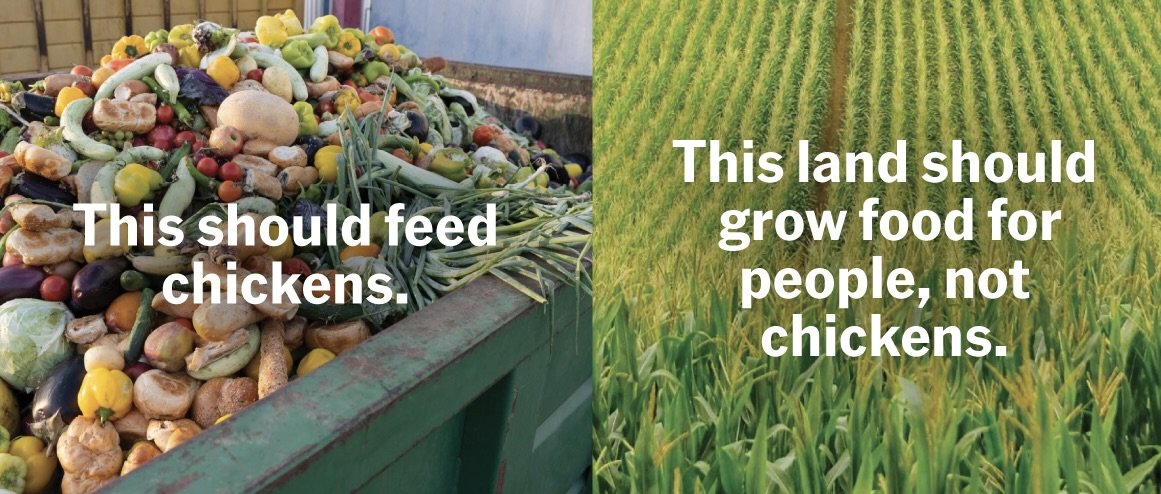
In the U.S., roughly 30–40% of food is never eaten. This isn’t because people don’t care. It’s because our food system is designed for excess: strict aesthetic standards, overproduction, inefficient distribution, and limited pathways for surplus once food leaves the supply chain.
Ending food waste doesn’t mean eliminating abundance. It means using it better.
And around the world, that shift is already underway, in kitchens, on farms, and across entire food ecosystems.
Restaurants: From Disposal to Design

Restaurants sit at a powerful intersection of food waste and food innovation. Historically, surplus food has had few options: landfill, compost, or at best, donation.
But a growing number of chefs and restaurateurs are rethinking waste as a design problem, not a moral failing.
Smarter menu planning, root-to-stem cooking, preservation techniques, and partnerships with food recovery organizations are all helping reduce waste before it happens. Some kitchens are even tracking surplus as carefully as they track sales. As in everything, what gets measured gets redesigned.
The future restaurant isn’t waste-free because it’s restrictive. It’s waste-aware because it’s intentional.
Farms: When “Waste” Becomes Feed
Perhaps one of the most exciting shifts in food waste reduction is happening further upstream, on farms.
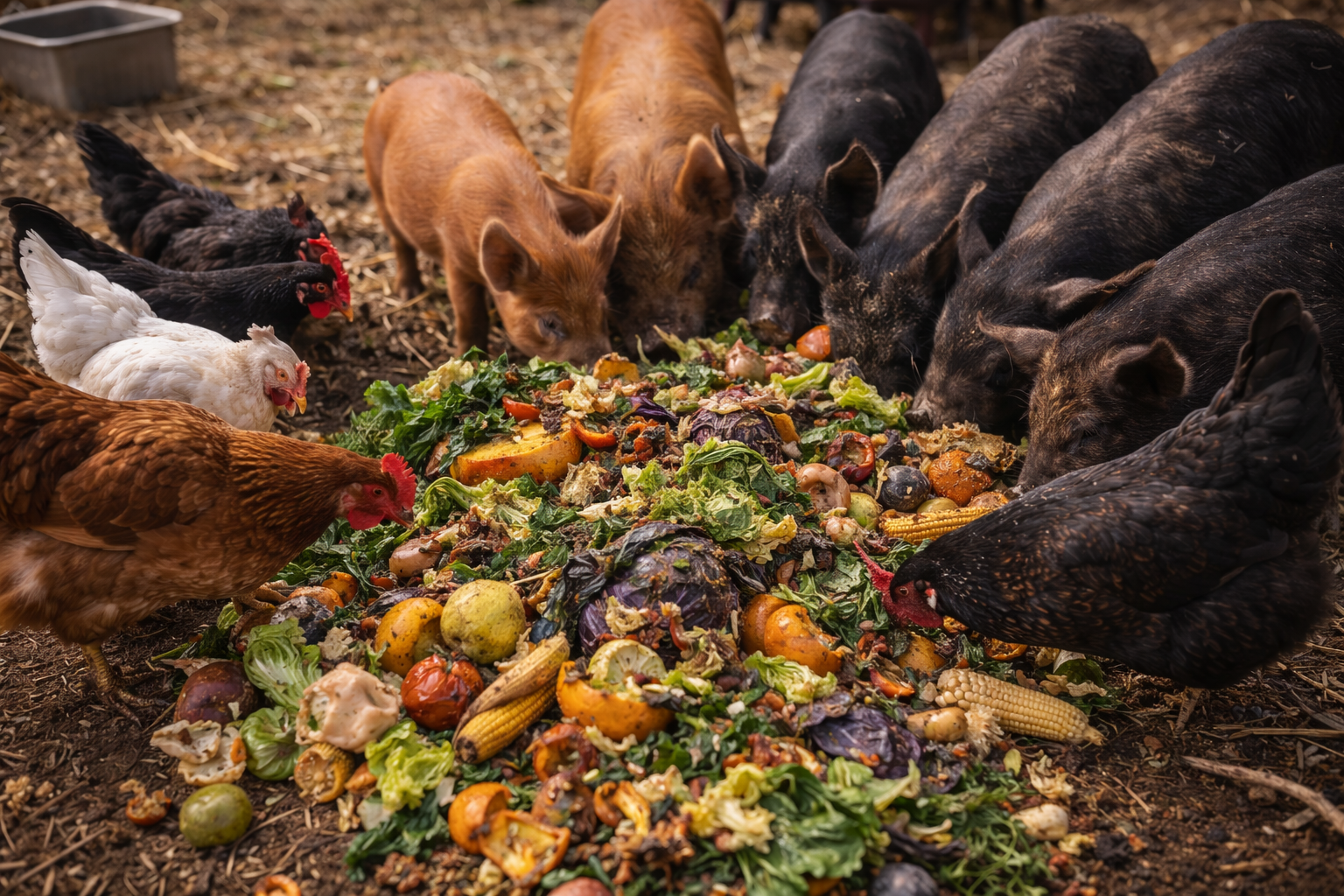
At Blue Hill at Stone Barns, researchers and farmers have been exploring what happens when food scraps are redirected back into the food system; not as compost, but as animal feed.
Through their Waste-Fed Omnivores initiative, hens were gradually fed increasing amounts of food waste, starting at around 10% and carefully working up to nearly 90% of their diet. The result? Eggs described as more delicious, with ongoing research into flavor, nutrition, and safety.
This isn’t just tossing leftovers to animals. It’s about redesigning feed systems so that crops don’t need to be grown solely to feed livestock, while edible food is thrown away elsewhere.
It’s circular thinking in action: food feeds people, surplus feeds animals, and the system wastes less at every step.
Beyond Blue Hill at Stone Barns’ intentional waste-fed hens experiments, there are other inspiring examples of uneaten food being looped back into animal systems to reduce reliance on conventional feed crops and cut waste. For decades, farmers have redirected kitchen scraps, surplus produce, and post-harvest leftovers to livestock. This age old practice is recognized by the EPA as a legitimate way to keep edible nutrients in the food chain and lessen environmental impacts.
On the innovation side, startups and farms are turning leftovers into a higher value feed ingredient: for example, companies are producing protein rich animal feed from insects like black soldier fly larvae that consume food scraps and become sustainable feed inputs, closing nutrient loops and reducing pressure on soy and other feed crops. These efforts show a growing movement to rethink kitchen waste not as refuse, but as a resource that can nourish animals (and ultimately people) more sustainably while being mindful of strict pathogen control and handling standards.
Catching Food Earlier: The Role of Rescue
Of course, the most effective form of waste reduction is preventing waste from happening in the first place.
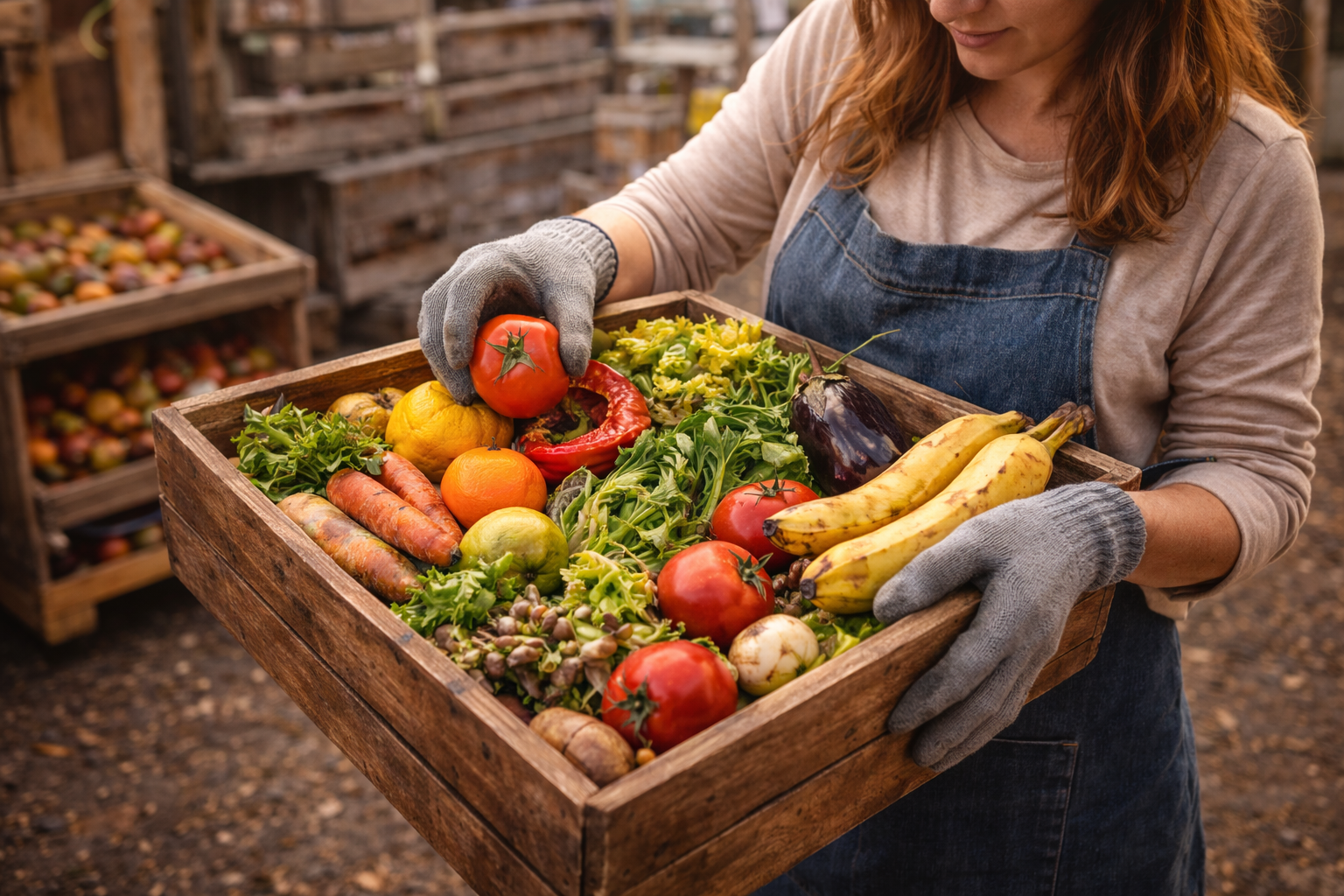
That’s where food rescue companies play a critical role. Businesses like Misfits Market focus on intercepting food before it ever becomes waste. This innovative company is selling produce and pantry items that are rejected due to appearance, surplus, or supply chain inefficiencies, not because of quality or nutrition.
This model quietly challenges one of the most ingrained assumptions in our food system: that food must look perfect to be valuable. By creating real demand for food that doesn’t meet cosmetic standards, rescue models reduce waste at the front end of the system, long before scraps, composting, or alternative uses even enter the conversation.
In many ways, this is where the biggest opportunity lies: designing systems that never allow abundance to slip into excess in the first place.
What the New Year Makes Possible For All of Us
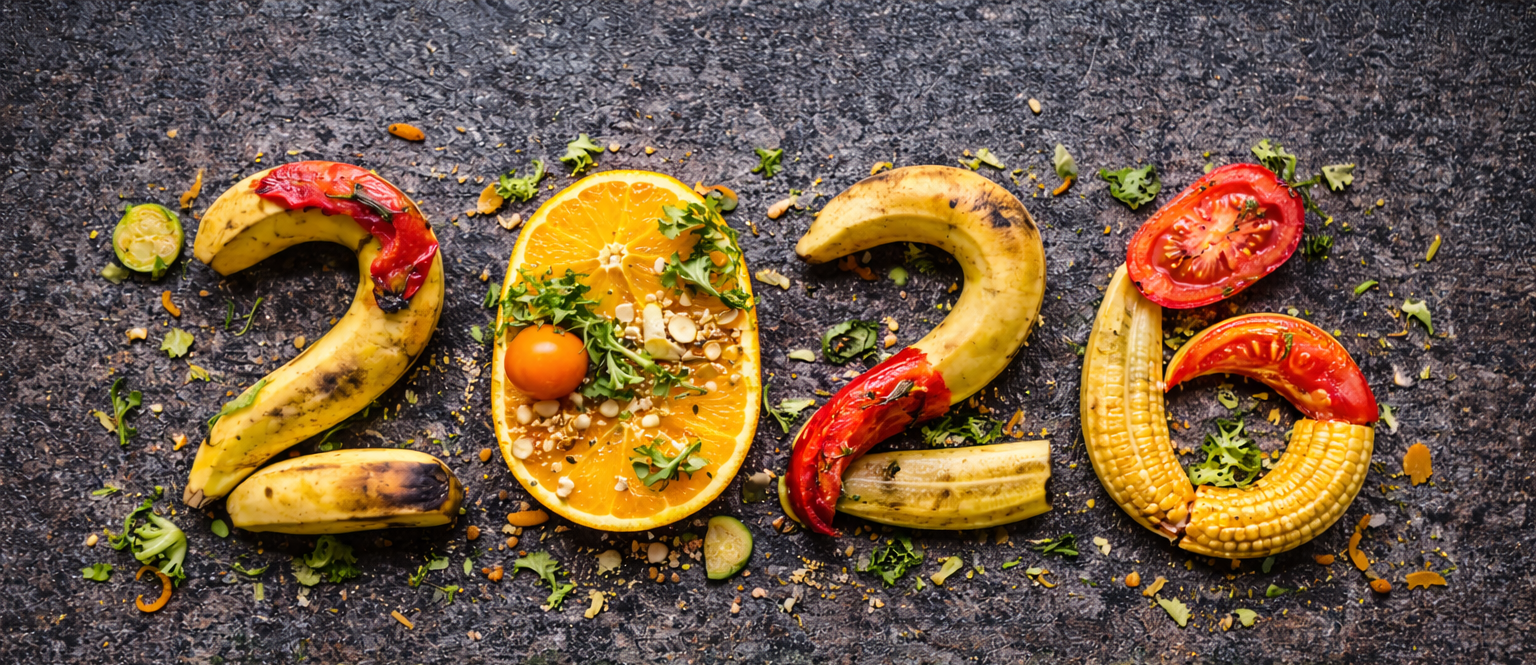
The new year offers a reset, not just for habits, but for how we think about systems, value, and responsibility. For individuals, meaningful change doesn’t require perfection. It starts with awareness. Buying imperfect produce, planning meals with flexibility instead of rigidity, freezing leftovers before they’re forgotten, donating what won’t be used (think local food pantries), and composting what truly can’t be eaten are all small but powerful actions. Together, they shift how we relate to food; from something disposable to something worth designing around.
Food has always been more than fuel. It’s culture, care, and connection. Innovating through curiosity; what if waste wasn’t inevitable, but a design problem hiding in plain sight? Ending food waste begins when we stop asking people to try harder, and instead, start building smarter systems.
That’s a resolution worth keeping, and as always, the RYSIT way.