
AI, Data Centers, and the Physical Cost of Our Digital Lives

Hi RYSERS,
Take a moment and think about everything you've done online today. Maybe you checked your email over breakfast, sent a text to a friend, uploaded a photo, streamed a song, asked AI a question, or backed up a file without even thinking about it. It probably felt effortless.
For decades, we've described the internet using language that makes it sound almost magical. We save things to "the cloud." We stream from somewhere. We connect instantly with people thousands of miles away. The experience feels weightless. Yet the digital world has never been weightless. Every photo, search, video, email, social media post, and AI prompt depends on a vast physical network of buildings, cables, cooling systems, energy infrastructure, and servers working around the clock.
The cloud has an address, and suddenly people are paying attention.
Across social media, community meetings, news headlines, and policy discussions, a new conversation is emerging around the rapid expansion of data centers. As artificial intelligence accelerates demand for computing power, enormous facilities are being proposed across rural landscapes, near residential communities, and in regions already grappling with questions about energy, water, and land use.
For some, these facilities represent innovation and economic opportunity. For others, they raise concerns about environmental impact and the growing footprint of our increasingly digital lives.
The debate is often framed as a choice between technology and sustainability.
At RYSIT, we think the conversation is more interesting than that.
Data centers did not begin with AI. They are the physical manifestation of a digital world humanity has been building for decades. Every search, every stream, every upload, every swipe. Artificial intelligence may be accelerating the story, but humanity started writing it long ago.
So perhaps the real question is not whether technology should continue to evolve. Perhaps the question is how we can build a future where innovation, responsibility, and sustainability grow together.
Let's explore.
The Cloud Was Never a Cloud
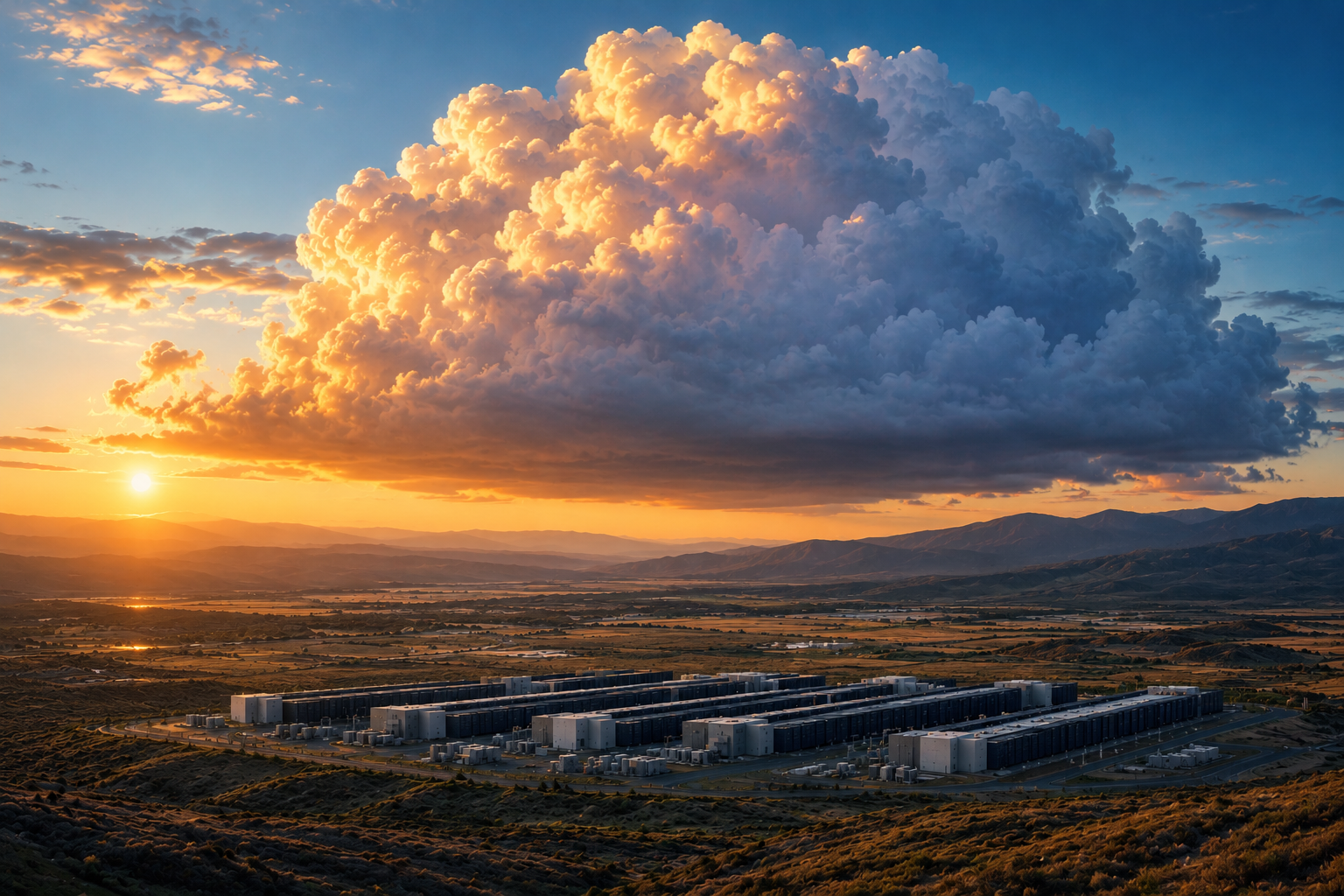
For years, the word "cloud" has been one of the most successful marketing terms in modern technology. It sounds light, airy, and almost ethereal. The reality is far more grounded.
A data center is essentially a giant physical hub filled with servers that store, process, and distribute digital information. These facilities power websites, cloud storage, streaming and gaming platforms, online banking, social media, apps, and now increasingly, artificial intelligence.
Every file, photo, message, and stream that feels instant and invisible still depends on physical infrastructure operating behind the scenes.
Often, that infrastructure takes the form of warehouse-sized facilities filled with thousands of servers operating day and night. Collectively, these facilities form the backbone of our digital world.
Most of us rarely think about them because they operate quietly behind the scenes. Yet they have always been there, supporting nearly every aspect of modern life.
Artificial intelligence didn't create this infrastructure. It inherited it.
What AI has done is dramatically increase demand for computing power, bringing renewed attention to a system that was largely invisible to the public until now. For perhaps the first time, people are beginning to ask a simple but important question:
If our digital lives live somewhere physical, what does that mean for the future?
Why Is Everyone Talking About This Now?

If data centers have been quietly powering the internet for decades, why are they suddenly making headlines?
The answer is scale.
Artificial intelligence has dramatically increased demand for computing power. Every AI-generated image, research query, recommendation engine, language model, and automation tool relies on immense amounts of data processing happening behind the scenes. To meet that demand, technology companies are building data centers at a pace that is difficult to ignore.
One of the most ambitious examples is the proposed Stratos project in Utah, a 40,000-acre campus backed by investor Kevin O'Leary that could eventually become one of the largest AI-focused data center developments in the world. Projects like this are appearing across rural landscapes, near residential communities, and in regions already facing questions about energy, water, and land use.
For some communities, these developments represent jobs, investment, and technological -leadership. For others, they raise important questions about energy demand, water consumption, and how to balance economic opportunity with environmental stewardship.
Perhaps the most interesting shift is not the construction itself, but the public reaction to it.
For years, the digital world felt separate from the physical one. We rarely thought about where our data lived or what it took to keep the internet running. Today, that separation is becoming harder to maintain.
As our lives become increasingly digital, many people are beginning to recognize a surprising reality: The more virtual our world becomes, the more physical infrastructure it seems to require.
What Is Worth Powering?

The conversation around data centers often becomes polarized.
On one side are those who see artificial intelligence as an extraordinary technological leap. On the other are those who see rising energy demand, growing resource consumption, and an increasingly digital society that seems disconnected from the natural world.
The reality is more nuanced.
Artificial intelligence is already being used to analyze climate patterns, improve disaster forecasting, accelerate scientific research, optimize energy systems, improve accessibility, and help researchers identify diseases earlier. These applications have the potential to create meaningful benefits for people and the planet alike.
At the same time, not every use of AI carries the same weight. Many of us have probably smiled at an AI-generated image, experimented with a novelty app, or watched a viral trend unfold online. There is nothing inherently wrong with curiosity or creativity. Yet the growing conversation around data centers has prompted a broader question:
How do we decide what is truly worth powering?
The question is not whether artificial intelligence should exist. The more meaningful question may be whether we can become more intentional about the technologies we build, support, and use.
Every generation faces decisions about how it allocates its resources. Ours happens to be making those decisions in the digital age.
For most of human history, our footprints were easy to see. We could point to a road, a bridge, a factory, or a building and understand the resources required to create it.
Digital life feels different. A photo uploaded from California can appear on a phone in Rome seconds later. A student can access a library of knowledge from a bedroom. A video call can connect families separated by oceans. The convenience is remarkable.
What makes this moment unique is that we are only beginning to understand the physical systems that make those experiences possible. And perhaps the future will be shaped not only by what technology makes possible, but by what humanity decides is valuable.
Reinventing the Data Center
If the first generation of data centers was built around speed and scale, the next generation is increasingly focused on efficiency. Around the world, engineers, researchers, and technology companies are exploring new ways to reduce the environmental footprint of digital infrastructure while meeting growing demand.
Some facilities are being powered by renewable energy sources such as wind, solar, geothermal, and hydroelectric power. Others are experimenting with advanced cooling systems designed to dramatically reduce water and energy consumption.
One of the more ambitious and controversial ideas is taking data centers underwater.
China recently launched commercial underwater data centers off its coastline, using naturally cold ocean water to help cool servers. Supporters argue that this approach can significantly reduce the energy needed for cooling and lessen reliance on fresh water. Like many innovations, it introduces new questions of its own, including potential impacts on marine ecosystems that researchers continue to study.
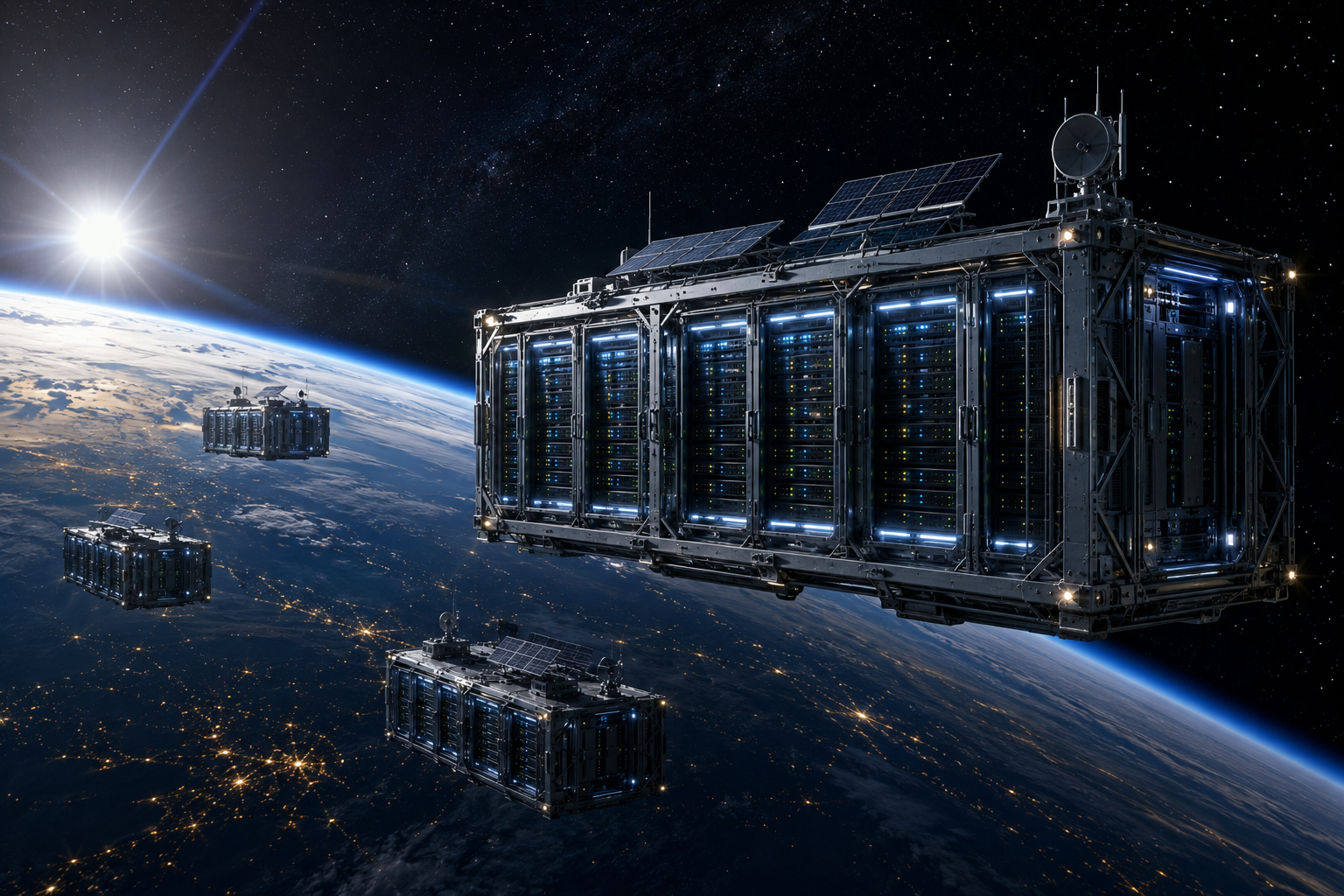
The conversation doesn't stop at Earth. SpaceX has proposed the possibility of future space-based computing infrastructure, raising entirely new questions about how humanity might one day distribute digital resources beyond our planet. Meanwhile, advances in semiconductor design are producing increasingly efficient chips capable of performing more computations while using less energy. Researchers are also developing AI models that require fewer resources without sacrificing performance.
None of these solutions are perfect. Yet they demonstrate something important: innovation is not standing still. The same creativity that helped build the digital world is now being applied to making it more efficient, more sustainable, and more thoughtful about the resources it consumes.
What Can We Actually Do?

Faced with conversations about artificial intelligence, data centers, energy demand, and digital infrastructure, it's easy to feel as though these decisions are happening far beyond our control.
In many ways, they are.
Most of us won't decide where the next data center is built or how future computing systems are designed. Yet that doesn't mean we're powerless.
Technology evolves in response to demand. Companies respond to consumers. Policymakers respond to public priorities. Culture shapes all of it. As digital citizens, we have more influence than we sometimes realize.
We can support companies investing in renewable energy and more efficient infrastructure. We can encourage transparency around energy and water usage. We can advocate for thoughtful land-use planning and responsible development.
Perhaps most importantly, we can become more intentional about how we engage with technology itself. Not fearful. Not anti-technology. Simply aware.
The goal isn't to stop progress. It's to participate in it thoughtfully. Because the future isn't being built by technology alone. It's being shaped by the values that guide it.
Final Thoughts
Perhaps that's the real story.
Not artificial intelligence, not data centers, not even technology itself, but awareness.
The ability to see the connections between the choices we make, the technologies we build, and the world we share. For much of the digital age, convenience allowed us to ignore those connections. Today, they are becoming harder to miss. And perhaps that's a good thing.
Awareness is often where better decisions begin. The opportunity to build smarter systems. To ask better questions. To align innovation with the values we hope will guide the future.
At RYSIT, we believe progress and responsibility belong in the same conversation. The future will not be shaped by technology alone. It will be shaped by the wisdom with which we use it. And that may be the most powerful resource of all. Not computing power, but human judgment.